Walk into any professional laundry and you’ll find chemical drums labelled “Alkaline Builder,” “Optical Brightener,” “Sour Neutraliser,” and “Quaternary Disinfectant.” For someone new to commercial laundry, this can feel confusing very quickly.
But understanding the basics of laundry chemistry can dramatically improve wash quality, reduce linen damage, lower chemical costs, and extend the life of your commercial laundry equipment.
Why Commercial Laundry Chemistry Matters
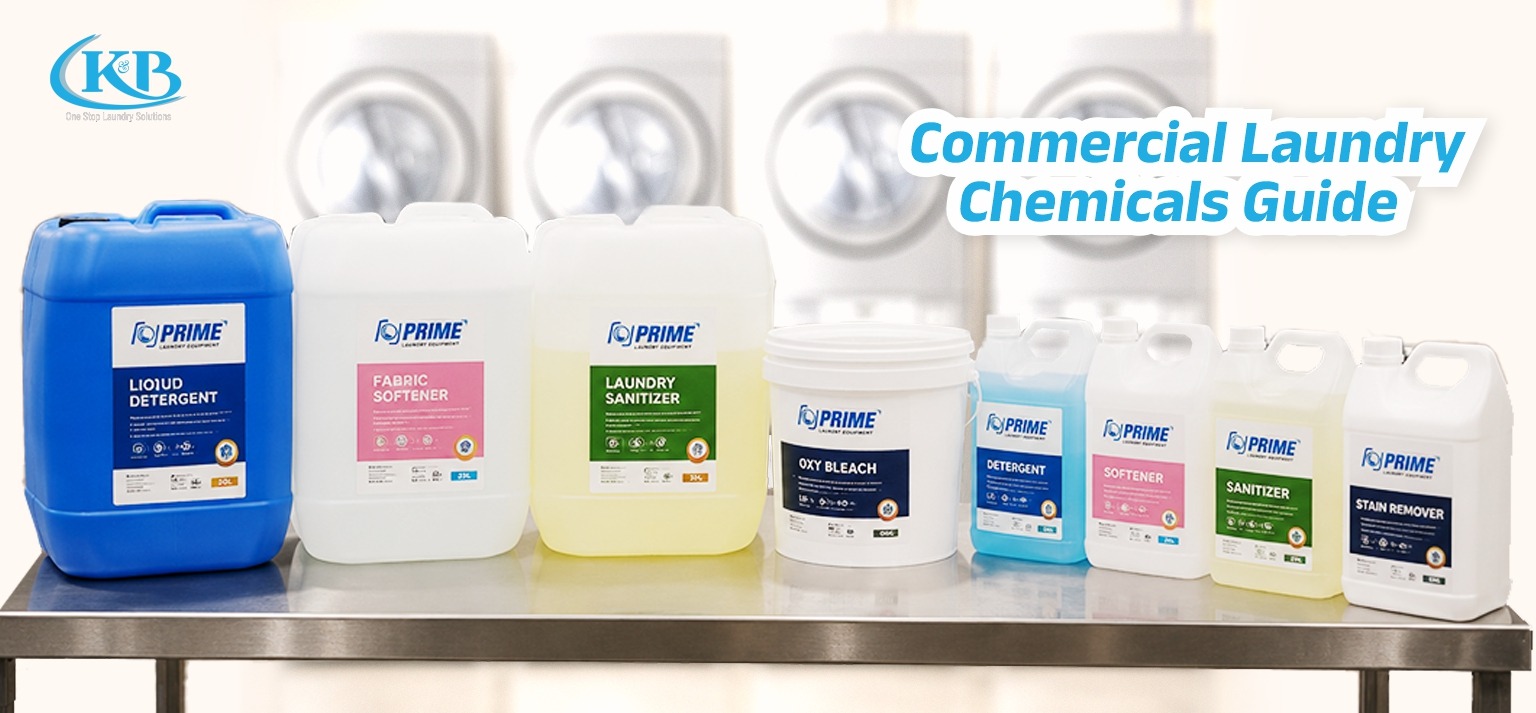
The 6 Core Categories of Commercial Laundry Chemicals
1. Detergent (Main Wash Chemical)
The primary cleaning agent used in every wash cycle. Commercial detergents are generally either alkaline-based for grease and body soil removal or enzyme-based for protein stains like blood, food, and grass.
Enzyme detergents perform best between 40–60°C, while heavy-duty alkaline detergents are more effective at higher temperatures for industrial linen.
2. Alkaline Builder / Pre-Soak
Builders soften water and loosen heavy soil before the main wash begins. This is especially important in hard-water regions where mineral deposits reduce detergent effectiveness significantly.
3. Bleach / Oxidising Agent
Chlorine bleach is highly effective but can damage coloured fabrics and elastic materials over time.
Oxygen bleach is gentler, safer for coloured fabrics, and commonly used in hotels and healthcare laundries.
4. Softener / Conditioner
Added during the final rinse cycle to improve fabric softness and guest comfort. In hotels, softeners play a major role in towel feel and customer perception.
However, excessive softener use can reduce towel absorbency over time.
5. Sour (Neutraliser)
Sour chemicals neutralise leftover alkalinity from detergents. Without proper neutralisation, white linen gradually develops yellowing and fabric damage.
The goal is to restore linen pH close to neutral before drying.
6. Disinfectant
Essential in hospitals, food factories, and healthcare laundries where microbial control is critical.
- Quaternary ammonium compounds — low foam, fabric-friendly disinfectants
- Peracetic acid disinfectants — hospital-grade solutions effective against spores and viruses
— K&B Chemical Partner Specialist
Critical: What NOT to Mix
Incorrect chemical combinations can damage machines, ruin linen, and create dangerous safety risks.
- Never mix chlorine bleach with acidic sour — releases toxic chlorine gas
- Never mix chlorine bleach with ammonia-based detergents — creates hazardous chloramine vapours
- Never add bleach and softener together — bleach neutralises the softener
- Never overdose alkaline builders — causes scaling, residue, and machine seal damage
Automatic Chemical Dosing Systems
Manual chemical pouring leads to inconsistent wash quality and unnecessary wastage.
Professional automatic dosing systems inject the exact amount of detergent, bleach, softener, and disinfectant at the correct stage of every cycle. This improves consistency while reducing chemical consumption by up to 30%.
How to Choose the Right Chemical Supplier
- Water testing should be performed before recommending chemicals
- Chemicals should match your machine type, linen category, and wash temperatures
- Safety Data Sheets (SDS) must be provided for all products
- Hospitals and food industries should only use certified, compliant chemicals
- Ongoing wash trials and linen audits should be part of supplier support
Why Professional Laundry Chemistry Saves Money
Many businesses focus only on the price of chemicals rather than the total operational impact. Poor-quality chemicals often increase linen replacement costs, energy usage, rewashing frequency, and machine maintenance expenses.
A properly designed chemical program improves wash consistency, extends linen life, protects equipment, and lowers overall operating costs.
Need Help Choosing the Right Laundry Chemicals?
K&B Associates provides free laundry chemical audits including water testing, linen assessment, and chemical recommendations for hotels, hospitals, factories, and commercial laundries.


