Hospital-acquired infections (HAIs) affect an estimated 4 million patients across Europe alone each year — and contaminated linen is a significant but underappreciated contributor. In India, where many healthcare facilities still rely on manual or semi-automated laundry processes, the risk is higher still.
Whether you run a 50-bed nursing home in Pune or a 500-bed multi-speciality hospital in a metro city, your linen management process must meet specific hygiene, thermal disinfection, and handling standards. This article explains exactly what those standards are and how to achieve them.
The Scale of the Problem
The 3 Categories of Hospital Linen
Not all hospital linen carries the same risk. International guidelines (and NABH requirements) classify linen into three categories, each requiring different processing:
1. Used (Soiled) Linen
Linen from general wards, outpatient areas, and administrative sections. This must be collected in colour-coded bags (typically white), transported in covered trolleys, and processed using a thermal disinfection cycle (minimum 71°C for 3 minutes or 65°C for 10 minutes).
2. Infected / Fouled Linen
Linen visibly contaminated with blood, body fluids, or from confirmed infectious disease patients. This must be placed in water-soluble bags directly at the point of use (staff should never handle it with bare hands), sealed, and transported in red-coded bags for priority processing with a disinfection pre-wash.
3. Highly Infected / Barrier Linen
Linen from isolation wards, TB patients, or high-risk infection cases. This requires separate handling, a dedicated wash program, and in some cases, incineration of severely contaminated items.
— Sanket Jain, K&B Associates, Pune
What NABH Says About Hospital Laundry
The National Accreditation Board for Hospitals (NABH) in India has specific requirements under its infection control and facility management standards. Key mandates include:
- Segregation of clean and dirty linen at all times (separate trolleys, separate storage)
- Thermal or chemical disinfection validated for each wash cycle
- Staff handling infected linen must wear PPE — gloves, apron, mask
- Clean linen must be stored in a designated, enclosed, clean area — never on open shelves near clinical areas
- Maintenance records and wash cycle logs to be maintained and available for audit
The Right Equipment for Healthcare Laundry
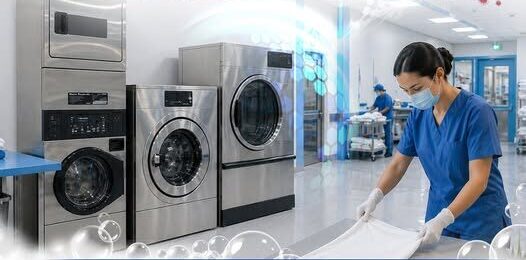
Achieving these standards requires machines specifically capable of programmed high-temperature cycles with chemical dosing integration. Key features to look for:
- Programmable wash cycles — machines that can be set to specific temperatures (65°C, 71°C, 90°C) for different linen categories
- Chemical dosing systems — automatic dispensers that inject the correct amount of disinfectant, detergent, and neutraliser at each stage
- Barrier (pass-through) washers — machines with a door on each side: dirty linen enters from the soiled side, clean linen exits on the clean side, preventing cross-contamination entirely
- Cycle documentation — modern machines can log every wash cycle with temperature, chemical usage, and time for NABH audit compliance
The True Cost of Getting It Wrong
A single HAI event linked to linen can cost a hospital significantly: in patient care, regulatory scrutiny, reputation damage, and in serious cases, legal liability. The cost of proper laundry equipment — a one-time capital investment — is a fraction of this risk.
K&B Associates has supplied and commissioned healthcare laundry systems for hospitals including SMBT Hospital, Nashik, and multiple nursing homes and diagnostic centres across Maharashtra and West Bengal. Every installation includes staff training, chemical protocol setup, and an ongoing AMC option.
Is Your Hospital Laundry NABH-Compliant?
We offer a free linen hygiene audit for hospitals. Our team will assess your current process and recommend improvements — at zero cost.


